
 Image 1 of 4
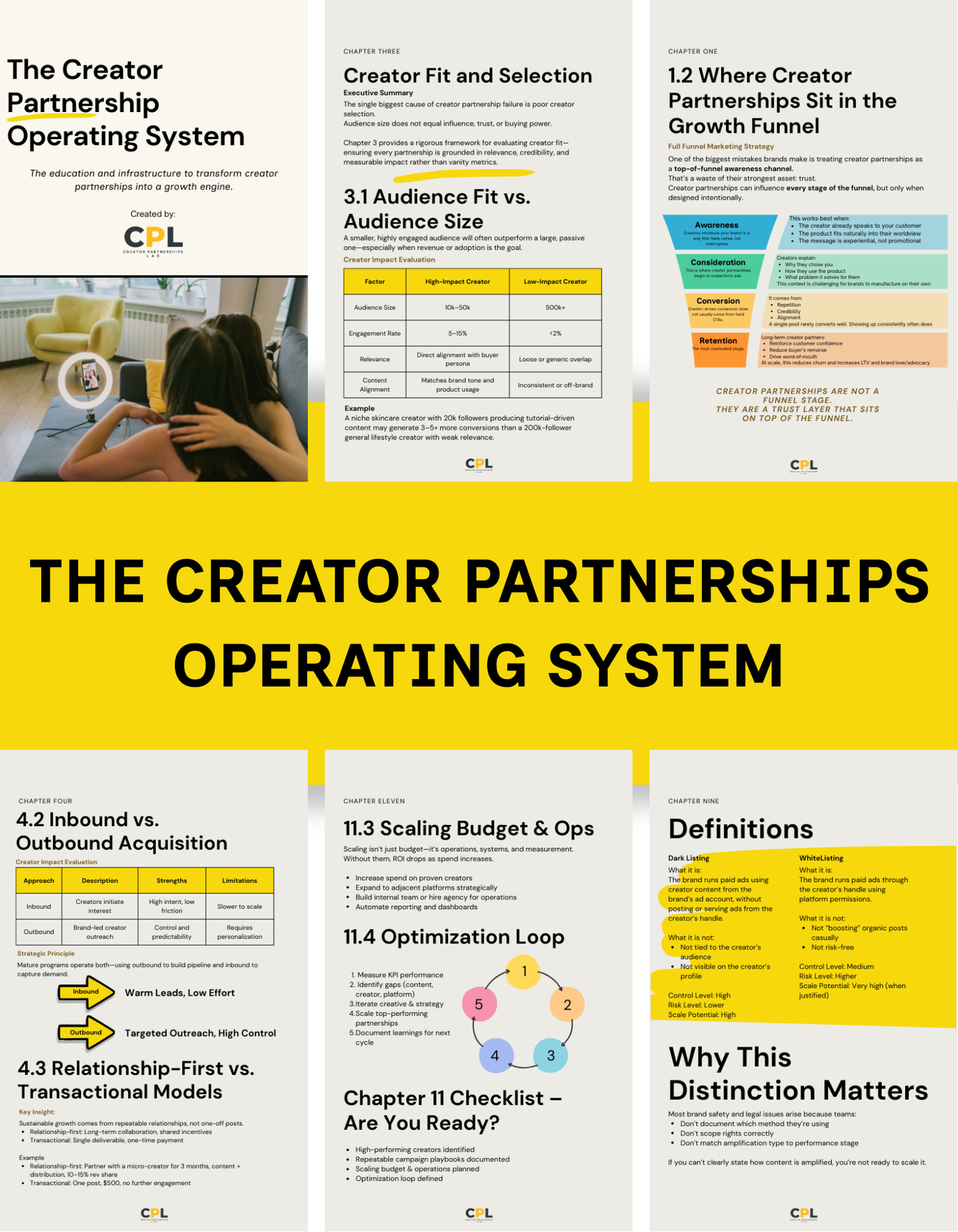 Image 2 of 4
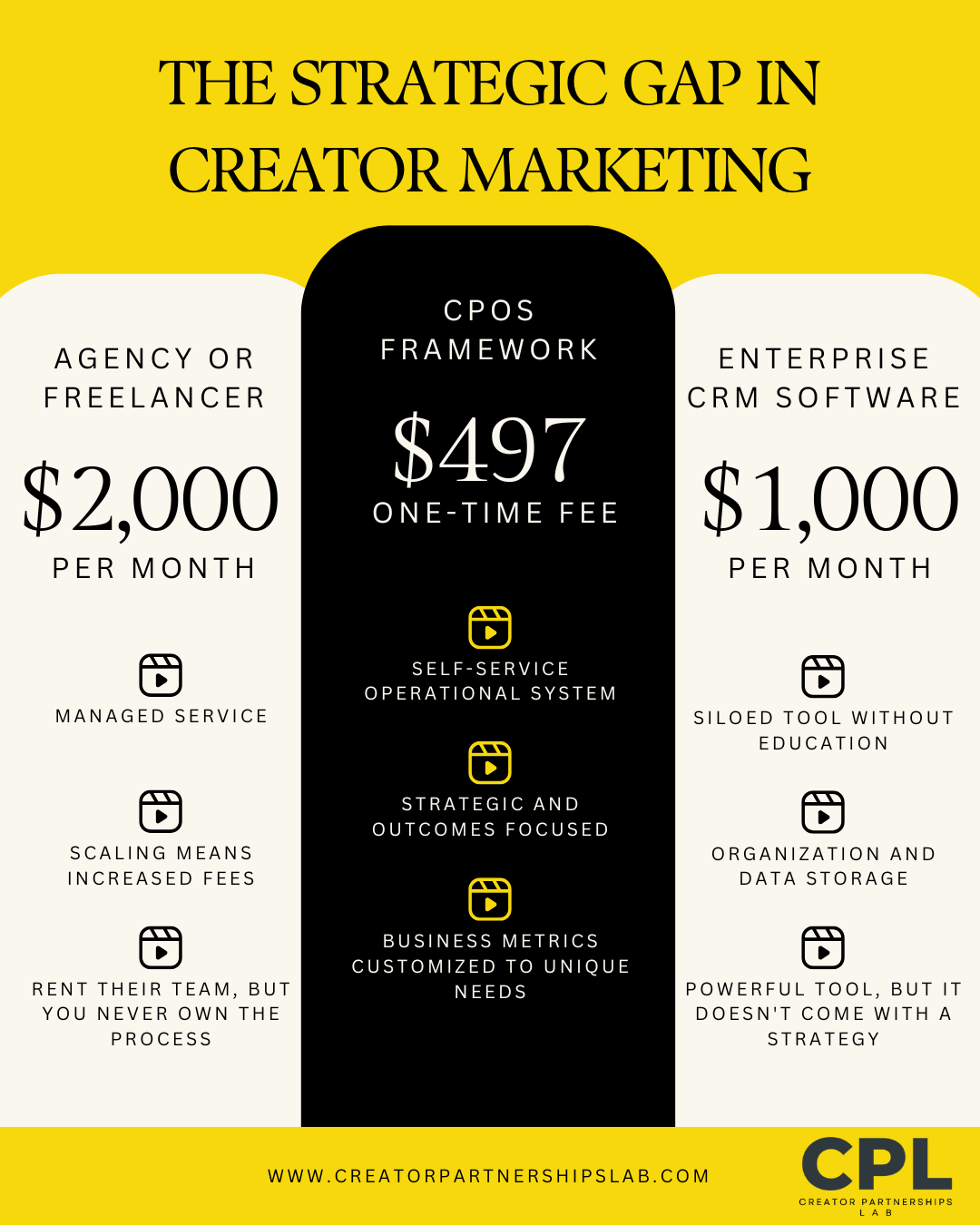 Image 3 of 4
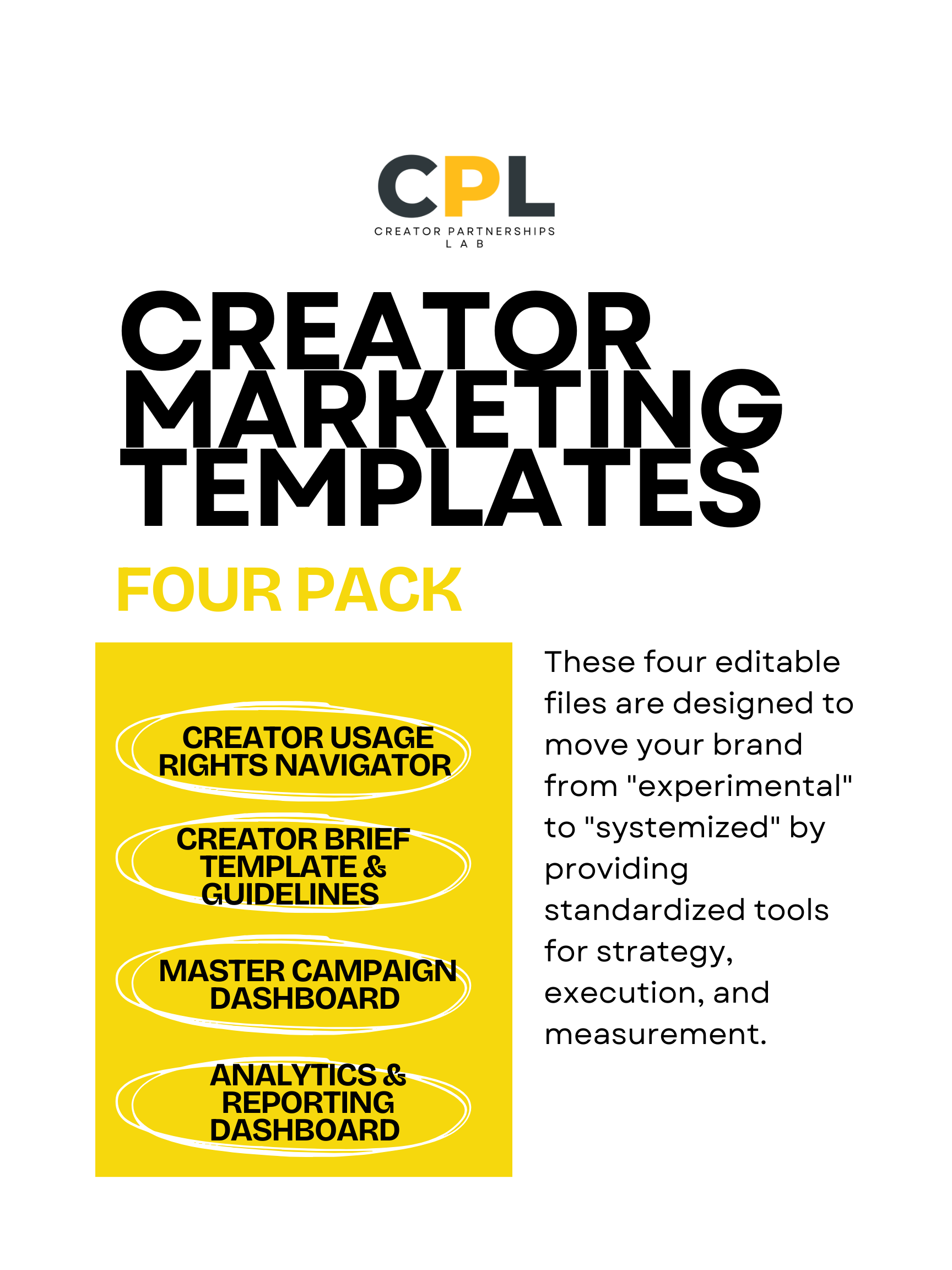 Image 4 of 4
The Creator Partnerships Operating System is the end-to-end framework that turns one-off influencer experiments into a repeatable growth engine — built for small teams who are done guessing and ready to build something that actually works.
What your creator program looks like on the other side.
- ✓ You will know exactly which creators to work with — before you spend a dollar — because you'll have a 4-dimension vetting framework that predicts fit, not just reach.
- ✓ You will show up to every creator conversation like a brand that has done this a hundred times — outreach frameworks, negotiation scripts, and briefing structures that get responses and get results.
- ✓ You will own every piece of content you pay for — because you'll have a usage rights system built into every deal from the start, not bolted on after the fact.
- ✓ You will know exactly what's working — because you'll have a measurement dashboard that connects creator activity to real revenue, not just likes and impressions.
- ✓ You will stop starting over — because you'll have a repeatable operating system that makes every campaign smarter than the last, and compounds over time instead of resetting.
The post going live was never the strategy. That's not a creator problem. That's an infrastructure problem. And it's fixable.
Small brands actually have an edge here. Most of them just don't know it yet.
Global brands don't win at creator marketing because they have more money. They win because they have more infrastructure — the brief that gets great content every time, the system that tracks which creator drove which dollar, the negotiation framework that means they own what they paid for.
That infrastructure used to live inside agencies with six-figure retainers. Now it's inside CPOS — and a team of one can run it.
Here's what's inside — and what each part does for you.
Strategy — so every dollar you spend has a job.
Define exactly what creator marketing needs to do for your business — revenue, awareness, or adoption — and build a strategy around that outcome instead of around trends or gut feeling.
Finding & signing the right creators — so you stop guessing and start deciding.
Identify, vet, reach out to, and close partnerships with creators who actually fit your brand. Build outreach that gets responses, negotiate deals that protect you, and lock in usage rights before the campaign begins — not after.
Running campaigns that convert — so every piece of content earns its place.
Design campaigns mapped to your funnel, brief creators in a way that gets great content without micromanaging, and distribute across organic and paid channels to maximize every asset you've paid for.
Measuring what actually matters — so you always know what to do next.
Move from vanity metrics to the numbers that drive real decisions — revenue attribution, cost per acquisition, and a dashboard that tells you exactly where to invest next and what to cut.
Building the machine — so this runs without chaos.
Systemize the whole operation with templates, workflows, and documentation. Roles, accountability, risk, compliance, brand safety — all covered. You could hand this to someone else tomorrow and nothing would fall apart.
Your 90-day plan — so you know exactly where to start.
Assess where your program is right now using the Creator Partnership Maturity Model, and get a step-by-step implementation plan that integrates CPOS into your business in the next 90 days.
This was built for the person doing this without a safety net.
The founder doing this without a team. The marketer who has been handed the influencer program along with six other responsibilities. The small brand that keeps seeing bigger competitors win with creators and wondering what they're doing differently.
- ✔You want to stop experimenting and start building something that works
- ✔You're done paying the trial-and-error tax every time you try to figure this out on your own
- ✔You want the same infrastructure global brands use — without the six-figure agency retainer
- ✔The first campaign you run with this system pays for it. Every one after that is pure upside.
Frequently asked questions
I'm a small business. Is this too advanced for me? +
It's designed specifically for you. Large companies have entire teams to manage the chaos. Small businesses don't. The CPOS gives you the same professional infrastructure used by global brands, simplified so a team of one can run it without burning out.
Do I need expensive software to use this? +
No. The CPOS is built entirely in PDFs and Google Workspace — Sheets and Docs. No new subscriptions, no CRM required. Everything works out of the box from the moment you download it.
How long does it take to set up? +
The templates are ready to use the moment you download them. Most users have their campaign dashboard set up and their first strategic brief sent within 48 hours. The full system deepens as you go — but you're operational from day one.
Is this just a course on how to find influencers? +
No. Finding creators is about 5% of the work. The CPOS is an operating system — the strategy, the deal structure, the legal protection, the measurement, and the workflows that make creator marketing actually profitable. The back-end work that makes the front-end work.
What if I already work with an agency? +
The CPOS is the best check-and-balance you can have. It means you speak the same language as your agency, you own your data, and you own your rights — regardless of who you work with or what changes. You're building equity in your own systems, not theirs.
I've been burned by influencer marketing before. How is this different? +
Most people who get burned were running campaigns without infrastructure — no usage rights negotiation, no measurement setup, no way to know if it worked. CPOS is built specifically to close those gaps, so the next campaign you run is the one that finally works the way you hoped.